

🔬 1. Understanding the Obligate Carnivore: Biological Foundations for a Guide to Healthy Growth
As a dedicated breeder raising felines underfoot in a loving family environment, the single most common question we receive from new adoptive families is: “What exactly should I feed my new baby to keep them thriving?” It is an incredibly vital question to ask. The food your companion consumes during their first twelve months sets the permanent foundation for their lifelong immune health, skeletal structure, muscle density, and organ vitality.
Providing an authoritative guide to healthy growth means moving far past generic pet store marketing and looking closely at the biological realities of developing felines. In our home, we implement a strict, high-performance nutritional blueprint to ensure every single baby transitions seamlessly from our nursery to your living room couch. If you want to optimize your companion’s diet, this complete blueprint breaks down the exact science, premium brands, portions, and feeding schedules required to raise a vibrant, healthy companion.
🔬 1. Understanding the Obligate Carnivore: Biological Foundations
To truly master a comprehensive guide to healthy growth, we must first look at the unique biological makeup of the domestic cat. Unlike dogs, which are omnivores and can adapt to plant-based starches, felines are strict obligate carnivores. This means their bodies are anatomically and physiologically hardwired to survive and thrive solely on nutrients found in animal tissue.
High Protein Thresholds: Kittens burn through amino acids at an alarming rate to fuel their rapid cellular expansion. They require a significantly higher percentage of dietary protein than adult cats or developing puppies.
The Crucial Role of Taurine: Felines cannot synthesize taurine—an essential amino acid critical for healthy vision, cardiac muscle function, and reproductive health—on their own. This nutrient must come directly from real animal meat sources.
Zero Carbohydrate Requirement: A kitten’s digestive tract lacks the specific enzymes (like salivary amylase) needed to break down heavy grains, corn, or wheat efficiently. High-carbohydrate filler foods put unnecessary stress on their pancreas and liver.
In our home, we carefully inspect the back label of every single bag and can we purchase. If the first three ingredients do not explicitly list real animal proteins (such as deboned chicken, turkey, or salmon), we instantly put it back on the shelf. Between weeks 4 and 6, a kitten’s energy demands skyrocket, requiring precise calorie management to support rapid bone and muscle development. For a detailed scientific breakdown of early feline caloric needs, review the AAHA Feline Life Stage Nutrition Guidelines.
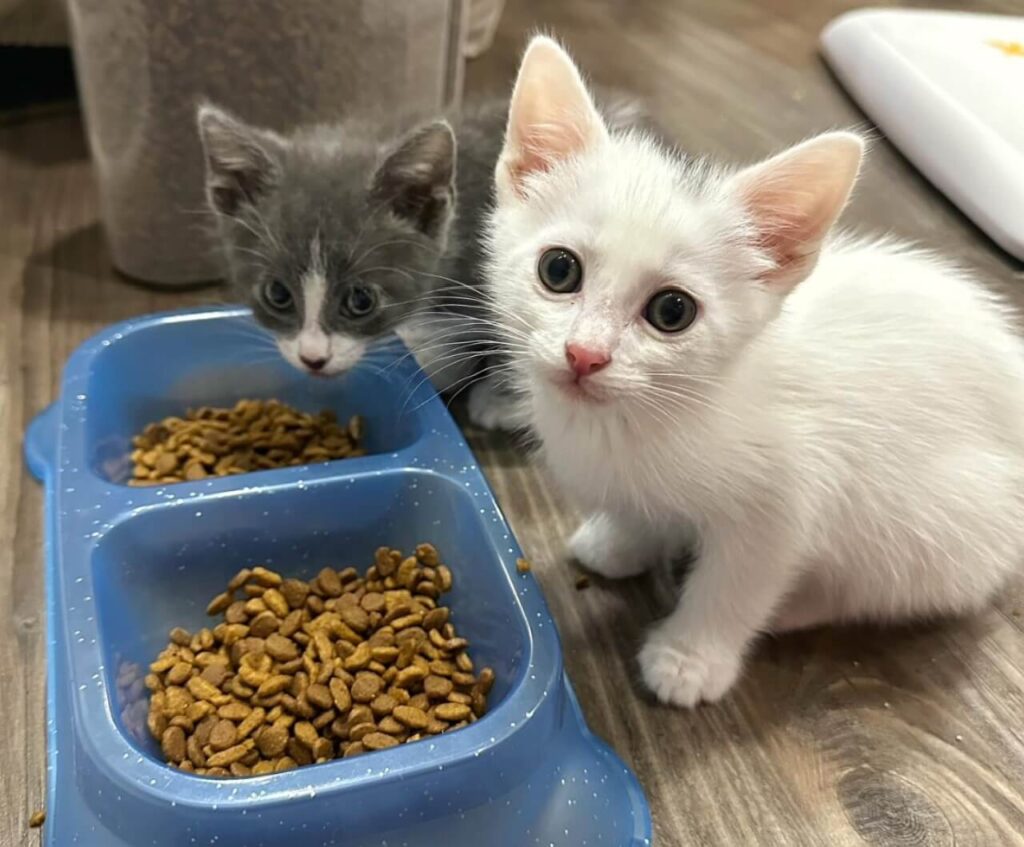
🥩 2. The Great Debate: Premium Wet Food vs. Dry Kibble
When building our own internal guide to healthy growth for our nursery, we quickly realized that a hybrid feeding approach yields the most robust health results. While some commercial brands claim that dry food alone is sufficient, our hands-on experience tells a completely different story.
Why Wet Food is Non-Negotiable
Wild felines obtain nearly all of their hydration directly from the prey they catch, resulting in a naturally low thirst drive. Domestic kittens fed an exclusively dry diet often live in a state of mild, chronic dehydration, which can lead to severe urinary crystals and kidney issues later in life. High-quality wet food provides the deep cellular moisture your kitten needs to keep their urinary tract perfectly flushed.
In our home, we heavily rely on top-tier wet food options like Royal Canin Mother & Babycat Ultra-Soft Mousse for early weaning, transitioning up to Weruva Kitten Formula or Tiki Cat Born Carnivore wet cans as they grow. These brands offer highly digestible, species-appropriate proteins wrapped in rich, hydrating broths.
The Role of High-Protein Dry Kibble
While moisture is critical, keeping a premium, grain-free dry kibble available is equally valuable for a growing kitten. Kittens experience intense metabolic spikes and need access to concentrated calories when their energy drops.
We utilize and highly recommend Orijen Kitten Grain-Free Dry Food or Acana Highest Protein Wild Prairie. These dry foods feature up to 90% animal ingredients and zero fillers, providing a safe, calorie-dense option for your companion to graze on between their structured wet meals.
🕒 3. Age-Based Schedules: Timing Your Guide to Healthy Growth
Knowing when and how often to offer meals is just as important as the quality of the food itself. A kitten’s stomach is roughly the size of a walnut at eight weeks old, meaning they cannot consume large volumes of food in a single sitting without suffering from painful bloating or regurgitation.
To make this a highly actionable guide to healthy growth, we have mapped out the exact daily schedule we implement in our own home based on your companion’s developmental milestones:
| Age of Kitten | Feeding Frequency | Daily Dietary Breakdown |
| 8 to 12 Weeks | 4 Times Per Day | 3 scheduled wet food meals + 1 small bowl of dry kibble left out for free-feeding overnight. |
| 3 to 6 Months | 3 Times Per Day | 2 structured wet food meals (morning and night) + 1 afternoon dry food snack. |
| 6 Months to 1 Year | 2 Times Per Day | 1 morning wet meal + 1 evening wet meal, with strict portion-controlled dry kibble allocations. |
By sticking to a predictable schedule, you keep your kitten’s digestive system operating smoothly, make litter box habits highly consistent, and reinforce a powerful emotional bond centered around your routine interactions.
🥛 4. Dangerous Dietary Traps to Avoid Completely
A fundamental section of any premium guide to healthy growth involves identifying the hidden dangers that can accidentally harm your new companion. There are several deep-rooted myths surrounding cat care that can cause severe gastrointestinal distress if practiced in your home.
The Myth of Cow’s Milk
We have all seen classic illustrations of a sweet kitten lapping up milk from a saucer. In reality, once kittens are completely weaned from their mother’s milk, their bodies stop producing lactase—the specific enzyme required to break down the sugars in dairy. Feeding a young kitten commercial cow’s milk will almost immediately trigger severe stomach cramps, painful gas, and explosive diarrhea, which can lead to rapid, life-threatening dehydration.
Toxic Household Foods to Hide
Your new family member is naturally curious and will eagerly attempt to inspect whatever you are cooking on your kitchen counters. You must ensure they never ingest even tiny particles of the following common household items, which are intensely toxic to feline systems:
Onions and Garlic: These completely destroy a cat’s red blood cells, triggering severe hemolytic anemia.
Chocolate and Caffeine: Both cause rapid heart rates, severe neurological tremors, and potential cardiac arrest.
Grapes and Raisins: Even small amounts can induce sudden, irreversible kidney failure in felines.
Add Your Heading Text Here
💧 5. Advanced Hydration Strategies for Felines
Because hydration directly dictates renal health, encouraging your kitten to drink fresh water is a cornerstone of our guide to healthy growth. Simply placing a standard plastic water dish next to their food bowl is often not enough to attract a selective feline.
Separate Food and Water Stations: In the wild, felines avoid drinking water near their kill sites to prevent consuming contaminated fluids. Place your kitten’s water stations a few feet away from their feeding area to honor this natural instinct.
Say No to Stagnant Water: Standing water quickly accumulates a thin film of dust and bacteria, which kittens can smell instantly. Change their water dishes twice daily, scrubbing the sides to keep them immaculate.
Invest in a Circulating Pet Fountain: Moving water naturally mimics a fresh, bubbling outdoor stream. The sight and sound of running water triggers a kitten’s natural curiosity and dramatically increases their daily fluid intake.
🏡 Setting a Lifelong Foundation for Wellness
Every single choice you make at the food dish during your companion’s first year directly shapes their long-term health, happiness, and lifespan. On our Home Page, we display our unwavering commitment to raising beautiful, structurally sound felines by utilizing these exact premium nutrition principles from the moment our litters are born. We take immense pride in setting a gold standard of care so that every baby leaves our nursery with robust health. Kittens raised directly in a warm, active household learn to trust human voices and touch much faster than those raised in isolated spaces. You can read more about our hands-on philosophy and daily care routines on our About Us page.
Are you completely ready to welcome a beautifully nourished, happy companion into your heart? Explore our Available Kittens Page right now to view our magnificent active litters growing up underfoot in our home, and find the perfect new addition to your family today!